DEX vs CEX: The Volume Gap Is Closing — What the Data Shows
For the first time in history, decentralized exchanges collectively processed over $200 billion in monthly volume in April 2026. We analyze the key drivers and what it means for the future of crypto trading infrastructure.
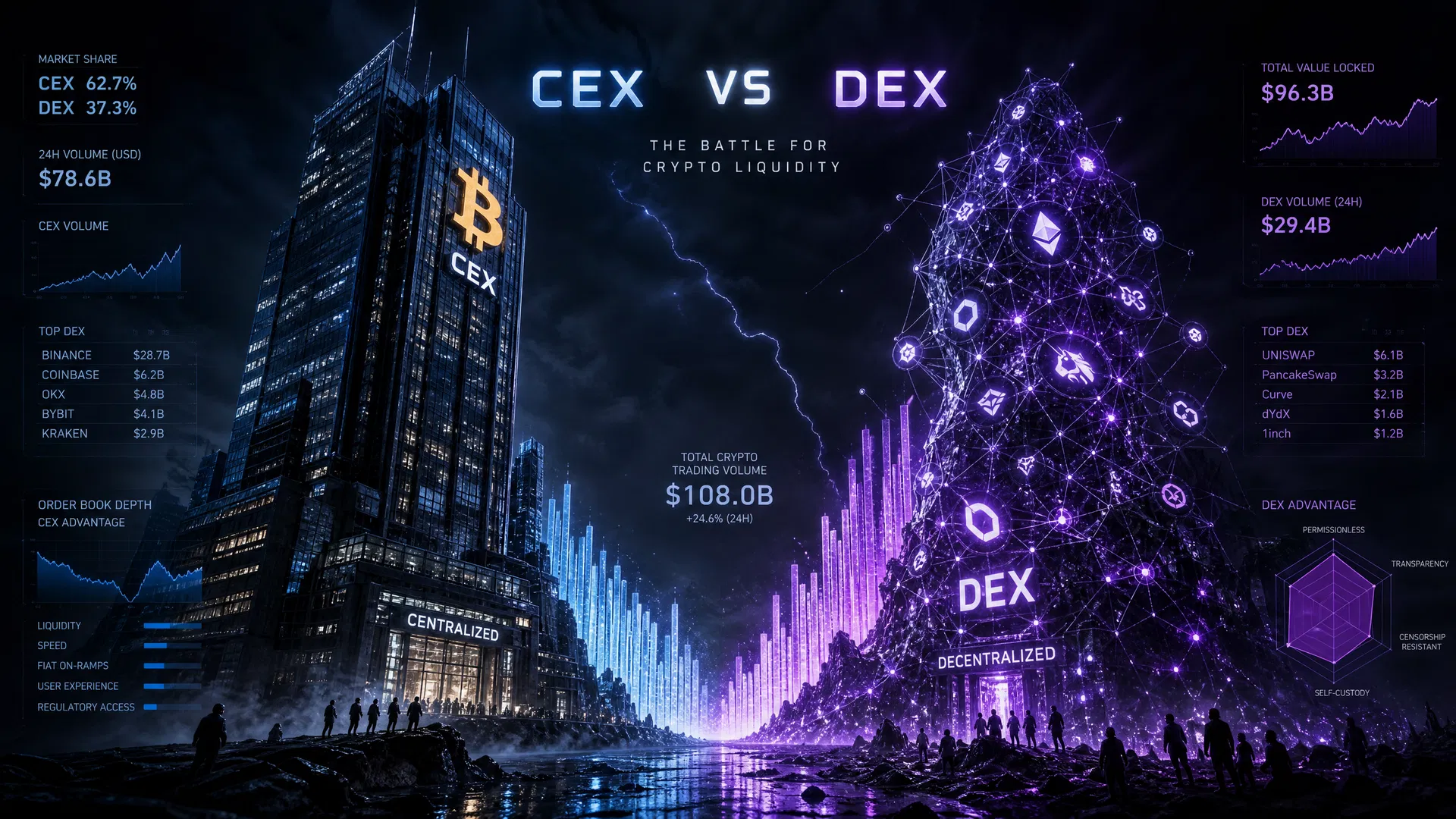
April 2026 marked a historic milestone for decentralized finance: DEX platforms collectively processed over $200 billion in monthly trading volume for the first time. While this still represents roughly 15–20% of total crypto exchange volume, the trajectory is unmistakable. In April 2021, DEX volume was less than 2% of the total market.
The growth is being driven by three converging factors. First, layer-2 scaling solutions have dramatically reduced transaction costs on Ethereum-based DEXes. Gas fees on Arbitrum and Optimism now average less than $0.05 per swap, making frequent trading economically viable for retail users. Second, perpetual futures DEXes — led by Hyperliquid, dYdX, and GMX — have captured significant institutional interest by offering leverage and sophisticated order types previously exclusive to centralized venues.
Third, and perhaps most importantly, the collapse of several major centralized exchanges between 2022 and 2024 permanently altered user trust dynamics. A meaningful segment of active traders now prefers the transparency of on-chain settlement, even at the cost of slightly higher latency and liquidity depth.
The data from ExchangeRank's index reflects this shift clearly. Among the top 20 exchanges by composite score, five are now DEX platforms — up from zero in 2021. Hyperliquid's weekly visit count has grown from under 100,000 in early 2024 to over 800,000 today, a growth rate that outpaces every CEX on our index.
For centralized exchanges, the strategic response has been mixed. Binance launched its own DEX infrastructure (BNB Chain) years ago and benefits from cross-platform liquidity. OKX has invested heavily in its Web3 wallet and DEX aggregator. Smaller CEXes without DEX strategies face the most existential pressure — and our composite scores increasingly reflect the divergence.
Related Articles

How Decentralized Exchanges Captured 24% of the Perpetuals Market in 2026
June 15, 2026 · 7 min read

Crypto Exchange Volume Doubles in Five Days — But ETFs and DEXs Are Rewriting the Market
August 31, 2026 · 6 min read

Solana DEXs Outrank Bybit, Coinbase, and Kraken in Spot Volume — Four Weeks Running
August 3, 2026 · 7 min read
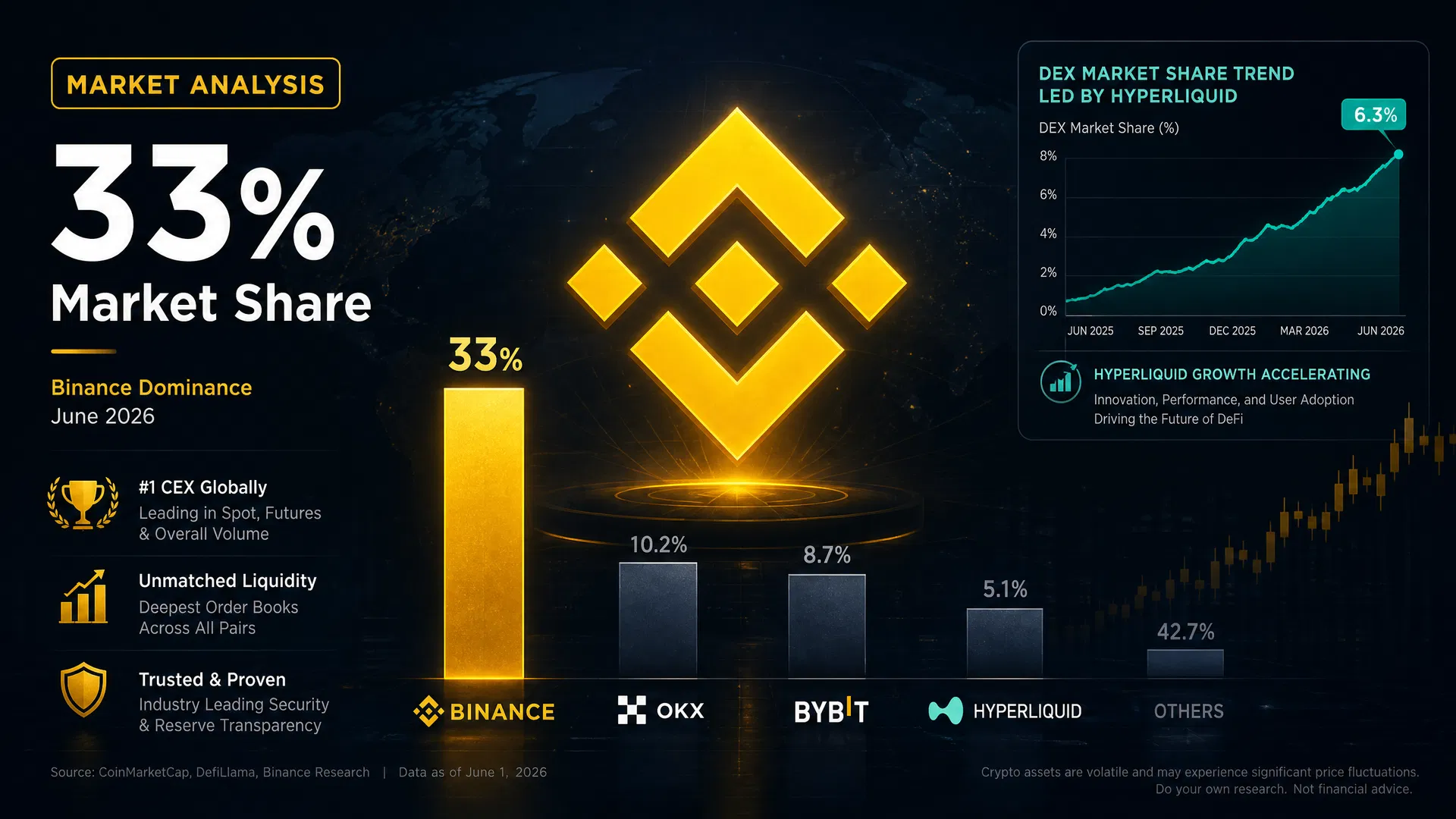
Binance Maintains Dominance in June 2026 — But DEX Volume Surges 34%
June 10, 2026 · 7 min read