GENIUS Act Explained: What the First US Stablecoin Law Means for Crypto Traders in 2026
The GENIUS Act, signed into law in July 2025, created the first federal framework for stablecoins in the United States. Here is what it means for USDT, USDC, and every crypto exchange serving American users.
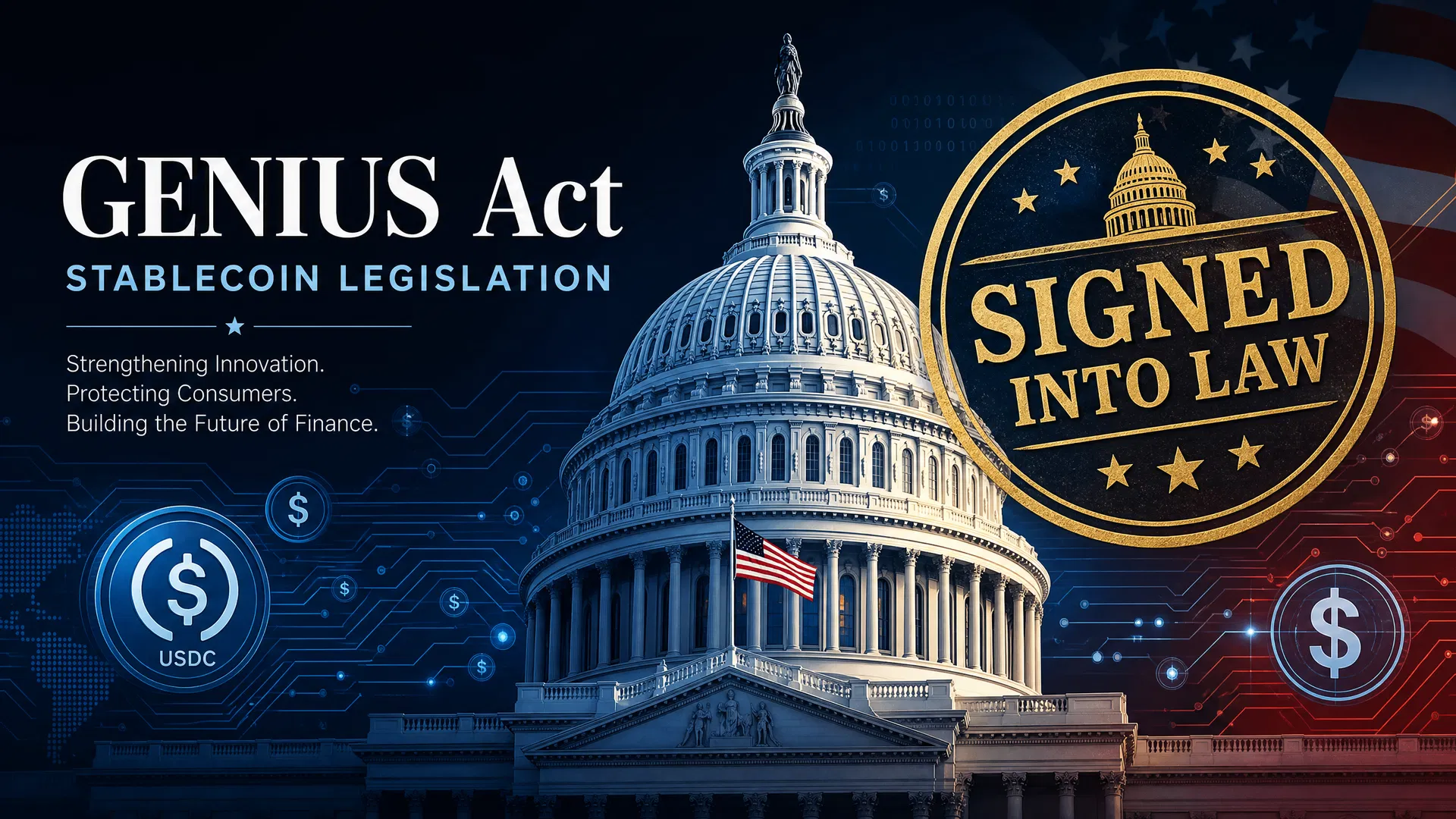
On July 18, 2025, President Trump signed the Guiding and Establishing National Innovation for US Stablecoins Act — better known as the GENIUS Act — into law. The legislation passed the Senate 68–30 and the House 308–122, marking the first time the United States Congress has enacted a comprehensive federal framework specifically for payment stablecoins.
The law does not regulate all cryptocurrencies. Its scope is deliberately narrow: it covers only "payment stablecoins" — digital assets designed to maintain a stable value relative to the US dollar and used primarily for payments and transfers. Bitcoin, Ethereum, and speculative tokens are outside its remit. But for the $170 billion stablecoin market, the GENIUS Act is a watershed moment.
The immediate practical consequence for most crypto traders is straightforward: USDT (Tether) is no longer compliant with US law, and every licensed US exchange is in the process of delisting it or restricting it to non-US customers. USDC (Circle) and PYUSD (PayPal) are the primary beneficiaries.
What Is the GENIUS Act?
The full name — Guiding and Establishing National Innovation for US Stablecoins Act — was introduced by Senator Bill Hagerty (R-TN) and co-sponsored by Senators Cynthia Lummis (R-WY), Kirsten Gillibrand (D-NY), and Mark Warner (D-VA). The bipartisan support was unusual for crypto legislation and reflected a broad consensus that the US needed clear rules before the stablecoin market grew further.
The Act establishes a dual federal-state regulatory structure. Issuers with more than $10 billion in stablecoins in circulation must be licensed by the Office of the Comptroller of the Currency (OCC) as "Permitted Payment Stablecoin Issuers". Smaller issuers may be licensed by state banking regulators, provided the state framework meets minimum federal standards set by the Federal Reserve.
The law also creates a new category of non-bank entity — the "Payment Stablecoin Issuer" — that can obtain a federal charter without becoming a full commercial bank. This was a key compromise that allowed fintech companies like Circle to operate without acquiring a bank charter.
The Core Requirements: Reserves, Redemption, and Transparency
The GENIUS Act imposes four core requirements on all permitted stablecoin issuers, regardless of whether they are federally or state-chartered.
First, issuers must maintain 1:1 reserves. Every stablecoin in circulation must be backed by an equivalent amount of US dollars held in insured bank accounts, short-term US Treasury bills (maturity of 93 days or less), or overnight reverse repurchase agreements collateralised by Treasuries. No other asset classes are permitted as reserve backing.
Second, issuers must publish monthly attestations from a registered public accounting firm confirming the composition and adequacy of reserves. Annual audited financial statements are also required for issuers above $50 billion in circulation.
Third, holders must be able to redeem stablecoins for US dollars at par value within one business day. Issuers cannot impose redemption fees, gates, or delays beyond this window.
Fourth, issuers are prohibited from paying interest or yield to stablecoin holders. This provision was heavily debated — it effectively prevents stablecoins from competing directly with bank deposits — but was retained as a condition for the legislation to pass with banking industry support.
Why USDT (Tether) Is Not Compliant
Tether (USDT), the world's largest stablecoin with approximately $113 billion in circulation as of mid-2025, does not meet the GENIUS Act's requirements on multiple grounds.
Tether is issued by Tether Operations Limited, a British Virgin Islands company. The GENIUS Act requires issuers to be US-chartered entities — either federally licensed by the OCC or state-licensed under a qualifying state framework. Foreign-incorporated issuers are not eligible for a permit.
Tether's reserve composition also does not comply. Tether's most recent attestation (Q1 2025) showed approximately 15% of reserves in "other investments" including Bitcoin, secured loans, and non-US government bonds — none of which are permitted reserve assets under the GENIUS Act.
Tether has stated it does not intend to seek a US permit and will instead focus on markets outside the United States. As a result, every US-licensed exchange — including Coinbase, Kraken, Gemini, and Robinhood — has either delisted USDT for US customers or restricted it to non-US accounts. Coinbase completed its USDT delisting for US users on September 1, 2025.
Winners: USDC, PYUSD, and the Compliant Stablecoin Market
Circle's USDC is the primary beneficiary of the GENIUS Act. Circle received its federal OCC charter in August 2025, becoming the first entity licensed as a Permitted Payment Stablecoin Issuer under the new law. USDC's reserve composition — 100% US Treasuries and cash held at regulated US banks — was already fully compliant.
USDC's market capitalisation grew from $33 billion in January 2025 to over $61 billion by December 2025, driven largely by the migration of US exchange volume away from USDT. Coinbase, which holds an equity stake in Circle, reported that USDC now accounts for 78% of stablecoin volume on its US platform, up from 41% in January 2025.
PayPal's PYUSD, issued by Paxos Trust Company (which received its OCC charter in September 2025), has also grown significantly. PYUSD reached $8 billion in circulation by year-end 2025, supported by integration into PayPal's 430 million user base and Venmo.
Several new entrants have also emerged. Stripe launched USDS in October 2025 through its banking subsidiary, targeting business-to-business payments. Fidelity announced plans for a dollar-backed stablecoin in Q4 2025, pending OCC approval.
Impact on Crypto Exchanges
For US-licensed exchanges, the GENIUS Act has created both compliance obligations and competitive opportunities. Exchanges that list stablecoins must verify that each stablecoin is issued by a permitted issuer or is not marketed to US customers.
Coinbase has been the most aggressive in adapting. In addition to delisting USDT, Coinbase launched a 4.1% APY programme for USDC held on its platform (structured as a yield product separate from the stablecoin itself, to comply with the Act's prohibition on stablecoin interest). The programme attracted $2.3 billion in USDC deposits within 60 days.
Kraken delisted USDT for US customers in August 2025 but retained it for its international platform. Kraken has also integrated USDC as the default settlement currency for its institutional OTC desk.
Smaller exchanges have faced higher compliance costs. The requirement to verify issuer permits and monitor reserve attestations has added operational overhead, particularly for platforms that previously listed dozens of stablecoins. Several smaller US exchanges have reduced their stablecoin offerings to USDC and PYUSD only.
The GENIUS Act and DeFi
The GENIUS Act explicitly excludes decentralised protocols from its definition of "payment stablecoin issuers". DAI (now USDS), issued by the MakerDAO/Sky protocol, is not subject to the Act because it is issued by a smart contract rather than a legal entity.
However, the Act does apply to any US-based entity that "facilitates" the issuance or redemption of stablecoins. This has created uncertainty for DeFi front-ends and aggregators based in the US. The OCC issued guidance in October 2025 clarifying that software developers who do not control user funds are not "facilitators" under the Act, but the question remains contested.
Algorithmically-stabilised stablecoins — those that maintain their peg through supply adjustments rather than collateral — are explicitly prohibited from being marketed as "payment stablecoins" in the US. This provision was added after the collapse of TerraUSD (UST) in 2022 and effectively bans algorithmic stablecoins from the US market.
International Implications: MiCA vs GENIUS Act
The GENIUS Act and the EU's MiCA regulation (Markets in Crypto-Assets) now form the two dominant global frameworks for stablecoins. Both require 1:1 reserves, regular attestations, and redemption rights. However, there are important differences.
MiCA permits a broader range of reserve assets, including EU government bonds and high-quality corporate bonds. The GENIUS Act is stricter, limiting reserves to US Treasuries and bank deposits. MiCA also imposes transaction volume caps on non-euro stablecoins (including USDC), while the GENIUS Act imposes no volume limits.
Tether has pursued a MiCA-compliant structure for its European operations through a separate entity, while maintaining its non-compliant global USDT product for markets outside the US and EU. This regulatory arbitrage is likely to persist as long as large unregulated markets remain.
What the GENIUS Act Means for Crypto Traders
For retail traders on US-licensed exchanges, the most immediate change is the unavailability of USDT. Traders who previously used USDT as a base currency for altcoin pairs will need to switch to USDC or PYUSD. Most major exchanges have automatically converted existing USDT balances to USDC at par.
The prohibition on stablecoin interest has a secondary effect: yield-bearing stablecoin products (such as Binance Earn USDT) are no longer available on US platforms. Instead, exchanges have structured separate yield products (money market funds, Treasury bill funds) that hold USDC as collateral but are legally distinct from the stablecoin itself.
For institutional traders, the GENIUS Act has increased confidence in the stablecoin market. The mandatory reserve requirements and monthly attestations reduce counterparty risk. Several institutional investors who previously avoided stablecoins due to Tether's opacity have now allocated to USDC as a cash management tool.
For international traders, the impact is more limited. USDT remains available on non-US exchanges and continues to dominate global stablecoin volume. Binance, OKX, and Bybit — none of which are licensed in the US — continue to offer USDT trading pairs globally.
Key Dates and Implementation Timeline
The GENIUS Act's implementation has followed a phased timeline. The Act was signed on July 18, 2025. The OCC was required to publish final implementing regulations within 180 days (by January 14, 2026). Existing stablecoin issuers had 18 months from enactment (until January 18, 2027) to obtain permits or cease US operations.
Circle received its OCC charter on August 12, 2025, ahead of the regulatory deadline. Paxos (PYUSD) received its charter on September 3, 2025. Tether confirmed on August 29, 2025 that it would not apply for a US permit.
The OCC published its final implementing regulations on January 10, 2026, four days ahead of the statutory deadline. The regulations clarified the definition of "payment stablecoin", the reserve asset requirements, and the process for state framework approval.
Start Trading on Regulated Exchanges
Frequently Asked Questions
Is USDT still legal in the US?
Does the GENIUS Act affect Bitcoin or Ethereum?
Can I still earn yield on stablecoins after the GENIUS Act?
What happened to my USDT on a US exchange?
What is the difference between the GENIUS Act and MiCA for stablecoins?
Which stablecoins are compliant with the GENIUS Act?
Useful Resources
GENIUS Act Full Text (Congress.gov)
https://www.congress.gov/bill/119th-congress/senate-bill/394
OCC: Permitted Payment Stablecoin Issuer Framework
https://www.occ.gov/topics/charters-and-licensing/financial-technology/index-financial-technology.html
Circle: USDC Reserve Attestations
https://www.circle.com/en/transparency
Tether: Reserve Attestations
https://tether.to/en/transparency/
ExchangeRank: US Licensed Exchanges
https://exchangerank.com/usa
ExchangeRank: MiCA Compliant Exchanges
https://exchangerank.com/mica
Related Articles
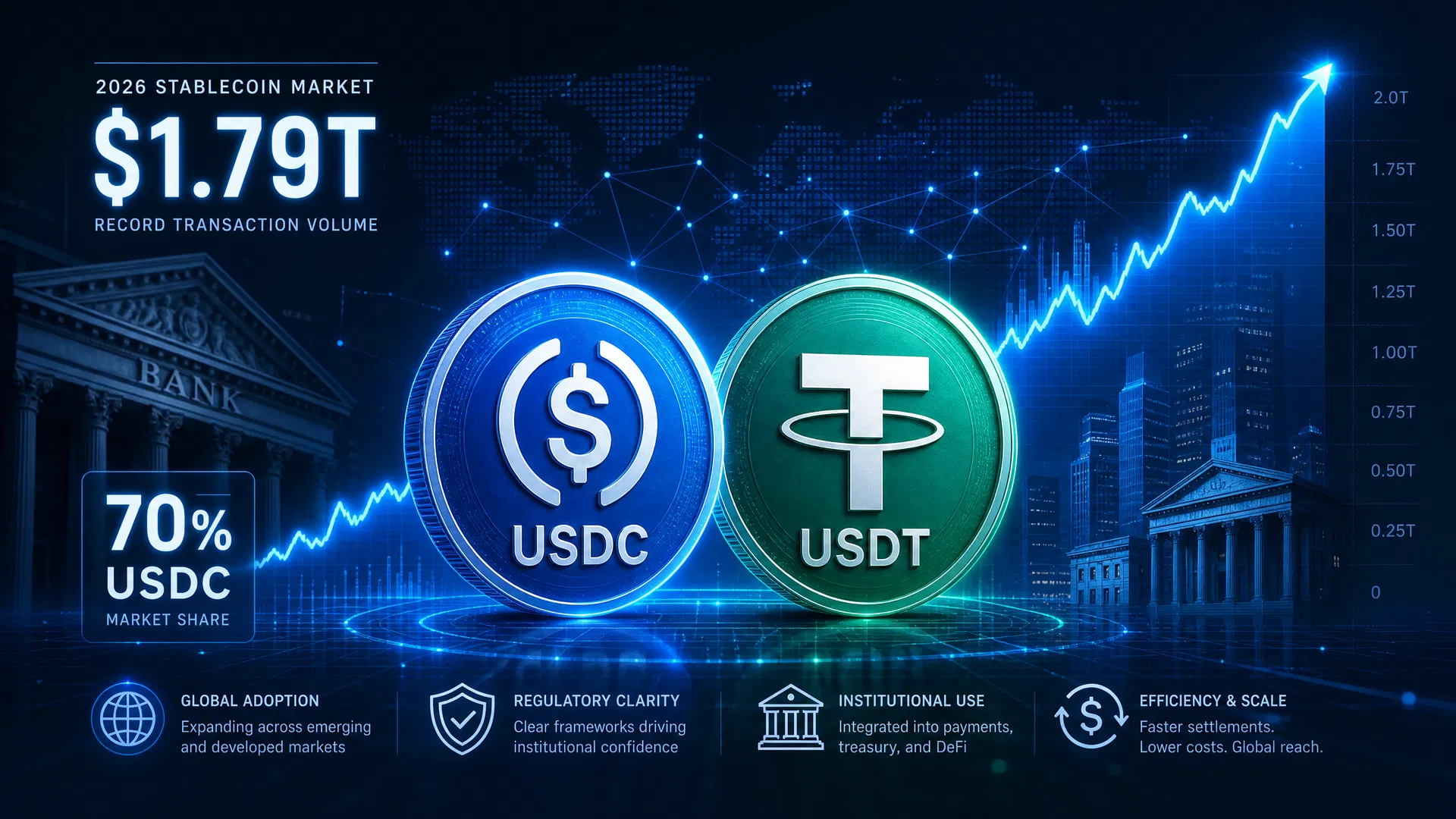
Stablecoin Market H1 2026: USDC Captures 70% of Volume as Banks Abandon the Sidelines
July 13, 2026 · 6

BitMEX Is Closing: The Exchange That Invented Perpetual Futures Shuts Down After 11 Years
August 10, 2026 · 7 min read

The CLARITY Act: America's Most Important Crypto Law Is Racing Against an August 10 Deadline
July 27, 2026 · 7 min read

Best Crypto Exchanges UK 2026: FCA-Registered Platforms Ranked
June 12, 2026 · 14 min read